The Major System is a memory technique that turns numbers into words. Each digit from 0 to 9 stands for a consonant sound. You add vowels to make a word, and the word gives you a picture to remember. So 32 becomes MooN, and 1969 becomes TaPe and JeeP. It’s also called the phonetic number system.
This guide covers the ten sounds (with audio), the rules, worked examples, where the system came from, and how to learn it. If you already know the sounds and want the words:
The full listThe Major System list, 00 to 99: all 100 words with pictures and soundWhat are the ten sounds of the Major System?
There is one sound for each digit: 0 is S or Z, 1 is T or D, 2 is N, 3 is M, 4 is R, 5 is L, 6 is SH, CH or J, 7 is K or G, 8 is F or V, and 9 is P or B.
That’s the standard mapping, the same one Wikipedia’s article on the system gives. The pairs aren’t random. Say S, then Z: your mouth stays where it is and only your voice switches on. T and D, K and G, F and V, and P and B work the same way, so each pair counts as one digit (Wikipedia describes them as voiceless and voiced pairs). Tap a sound to hear it.
| Digit | Sound | Usually spelled | Memory hook |
|---|---|---|---|
| 0 | SZ | s, z, and a soft c (ice) |  Zero starts with z. Say s, then z: same mouth, the voice switches on. |
| 1 | TD | t, d |  A 1 has one downstroke, like a t. Say t, then d: same tap, voice on. |
| 2 | N | n |  An n has two legs. Turn a 2 on its side and it is an n. |
| 3 | M | m |  An m has three legs. Turn a 3 on its side and it is an m. |
| 4 | R | r | 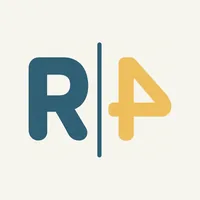 Four ends with an r. A 4 is a backwards R. |
| 5 | L | l | 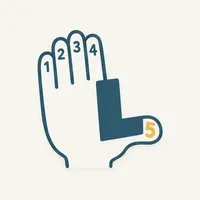 Hold up your hand: five fingers, thumb out, and you have made an L. |
| 6 | SHCHJ | sh, ch, j, and a soft g (gem) |  Shhh. A 6 curls like a finger to your lips. Ch and j live here too. |
| 7 | KG | k, q, a hard c (cat), and a hard g (go) |  A K is two 7s leaning together. Say k, then g: same catch, voice on. |
| 8 | FV | f, ph (phone), v |  A handwritten f loops twice, like an 8. Say f, then v: voice on. |
| 9 | PB | p, b |  A 9 is a backwards P. Flip it and it is a b. Say p, then b: voice on. |
How does the Major System work?
You listen to a word rather than read it. Only the consonant sounds count, and each one is a digit, in order.
- Sounds, not spelling. LighT is 51, because the gh makes no sound. Phone is 82, because ph sounds like F. Wikipedia’s own example is the letter C in call, cell and cello, which counts as 7, 0 and 6 (source).
- Vowels are free, and so are w, h and y. Wikipedia’s article lists the vowels, h, w, y and silent letters as unassigned (source). That’s why waGoN is 72: the w adds nothing.
- A double letter is one sound. TaTToo is 11, not 111, and BaLL is 95.
How does a number become a picture?
Swap each digit for its sound, add vowels until you have a word, and picture the word. For a long number, take the digits two at a time.
Start with 32. The 3 is M and the 2 is N. Add two o’s and you have MooN. That’s the first example we teach, because once you’ve seen it, 32 and a moon are hard to separate.
Now a year. Apollo 11 landed on the Moon in 1969 (NASA). Split it into 19 and 69: 19 is TaPe and 69 is JeeP. Picture a jeep wrapped in tape, rolling across the Moon, and the year comes back when you need it.


You already know how this feels. Say 007 and almost everyone thinks of James Bond. The number sticks because it’s tied to a character. The Major System gives every number that kind of hook, on purpose.
How do you remember long numbers with the Major System?
To memorise a long number, break it into pairs, turn each pair into its picture, and link the pictures into a short scene, in order.
Take the first eight decimals of pi: 3.14159265. After the 3, the pairs are 14, 15, 92 and 65, which give TRee, TaiL, BuN and JaiL. Picture a tree with a long tail, eating a bun in jail. Strange is good: a strange scene is easier to keep than a dull one.
The same works for PINs, phone numbers and dates. Today, 17 October 2026, is 17 10 20 26: DoG, ToeS, NoSe, NaCHo. A dog with its toes on its nose, eating a nacho.
Having a fixed word for every pair from 00 to 99 makes this quick, because you don’t have to invent a word each time. That’s what a peg list is, and ours is in the Major System 00–99 list with pictures.
Who invented the Major System?
No single person. The French mathematician Pierre Hérigone published an early version in 1634, and Aimé Paris published the first known version in its modern form in 1825.
| Year | Who | What they did |
|---|---|---|
| 1634 | Pierre Hérigone | Published an early digit-to-consonant code in his Cursus mathematicus.Wikipedia: Pierre Hérigone |
| 1730 | Richard Grey | Memoria Technica: a code that used both vowels and consonants for the digits.Wikipedia: Richard Grey |
| 1812 | Gregor von Feinaigle | The New Art of Memory, a book of his method: consonants only, chosen to look like the digits (t for 1, n for 2, m for 3). His 8 and 9 differ from today’s.The 1813 edition, Internet Archive |
| 1825 | Aimé Paris | Published the first known version of the system in its modern form.Wikipedia: Aimé Paris |
| 1845 | Major Bartłomiej Beniowski | Published a version in London. The name “Major System” may come from him.Wikipedia: Mnemonic major system |
We read Feinaigle’s 1813 edition ourselves. It explains the choice of letters by shape: a t is a down stroke like a 1, an n has two down strokes and an m has three. It also describes Grey’s older code as one that gave digits both vowels and consonants “in a manner perfectly arbitrary” (The New Art of Memory, 1813). The book was first published in 1812 (Wikipedia).
How long does it take to learn the Major System?
We couldn’t find a study that times it, so here’s the honest answer: the ten sounds are a small job, and the 100 words are the real work. How long they take depends on how often you practise.
The sounds are ten digits and seventeen sounds, and each has a hook to hang it on. The 100 pegs take longer, because each one is a picture you have to make your own. Learning them ten at a time, and testing yourself both ways, keeps the job in small pieces.
You’ll sometimes see a study quoted here, so it’s worth being exact about it. In 2017 the journal Neuron published a study in which people with no memory training practised for 30 minutes a day for 40 days. Their recall of a 72-word list rose from an average of 26 words to 62 (ScienceDaily, the paper). The technique they trained was the memory palace, not the Major System. It shows that ordinary people can learn memory techniques. It doesn’t tell you how long this one takes.
How do you use the Major System with a memory palace?
Turn the number into pictures with the Major System, then place each picture, in order, at a spot along a route you know well. To get the number back, walk the route in your head.
A memory palace is the old name for the method of loci. Your home works well: the front door, the hall, the kitchen table. Put the tree with the tail at the door and the bun in the hall, and so on. The researchers behind the 2017 study describe the memory palace as the strategy most world memory champions use (ScienceDaily). The Major System supplies the pictures; the palace keeps them in order.
What mistakes do beginners make?
Mostly reading words instead of saying them, and rushing on to 100 words before the ten sounds are automatic.
- Counting spelling. Ice is 0, not 70: the c sounds like S. Say the word out loud and count what you hear.
- Counting double letters twice. BaLL is 95, not 955.
- Picking words you can’t see. “Need” is a correct 21, but there’s nothing to picture. NeT is 21 too, and you can see it.
- Pegs that look alike. Our 41 is a RaT and our 30 is a MouSe. Give them very different pictures, or one will steal the other’s number.
- Learning and never using. Try the pegs on real numbers, like a door code or today’s date, as soon as you know a few rows.
Questions people ask about the Major System
Do you need a good memory to learn it?
No. The system does the remembering for you, by turning numbers into pictures. Boris Konrad, a memory champion and neuroscientist who co-wrote the 2017 Neuron study, put it plainly:
“I started with a normal memory and just trained myself”
Why is it called the Major System?
Nobody is sure. Wikipedia says the name may refer to Major Bartłomiej Beniowski, who published a version of the system in 1845 (source). The rest of the name is plain description: it’s a system for numbers.
Is the Major System a peg system?
It’s the tool you build a peg system with. A peg system links each number to a fixed, already learnt word. The Major System can make as many pegs as you need, unlike rhyming pegs such as one-sun, two-shoe (Wikipedia).
Do I need all 100 words?
No, and you don’t have to memorize them all before you start. You can turn any number straight into a word: 321 is mint, because M is 3, N is 2 and T is 1. A fixed list just saves you inventing a word every time.
Can I use it for dates and PINs?
Yes, that’s what it’s for. Split the date or the PIN into pairs and make a scene from the pictures, like the dog and the nacho above. A memory palace helps if the number is long.
Where to go next
- All 100 words, with pictures and audio, are in our Major System list from 00 to 99. It prints as a two-page sheet.
- See the ten sounds laid out as a keypad on our home page.
- Browse all our articles on the Major System and memory.
Learn it as a game
Memodate, our app, is the Major System built as a game: a complete course that teaches it from scratch, with all 100 numbers illustrated and voiced. It isn’t out yet. Join the list and we’ll tell you when it is.